
Gearing up for
outdoor adventure
Can you feel it? The temperature is rising, blossoms are starting to bud, daylight savings time is upon us…It’s been a cold winter, but spring is finally around the corner which means now is the time to start planning your North Carolina based warm weather adventures.
Whether you’re paddling the Roanoke River State Trail or hiking Whiteside Mountain near Highlands, you naturally want to help preserve the resource you’re exploring. You might think practicing good stewardship only matters when you’re on site during your adventure, but the foundation of solid Outdoor NC Leave No Trace principles actually begins at home with the gear you plan to take for your adventure.
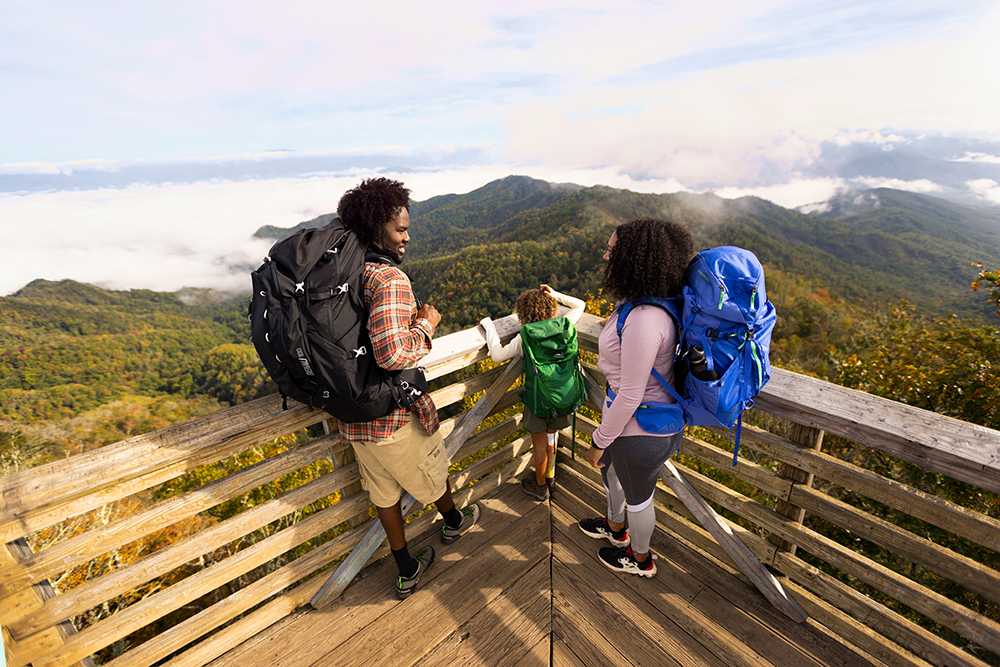
Whiteside Mountain near Highlands.
Carrying the proper gear as you head into the wild is step one of the first Outdoor NC Leave No Trace principle: Plan Ahead and Prepare.
Adventures can be unpredictable. That’s part of the appeal, but planning in advance and being prepared for any likely situation can help keep you safe while also providing a solid base for stewardship. Being adequately prepared for an adventure has a few key elements.
Know Where You're Going
Learn about the fabulous NC destination before you go, getting an understanding about its regulations and any potential weather that you could encounter.
Time Your Trip Wisely
Choosing a lesser-known area and planning your trip to avoid times of heavy use can help minimize the impact on the resource. Large crowds can stress wildlife and lead to unintentional widening of trails and trailheads. Have a backup plan if the destination is too crowded and the parking lot is full.
Get Your Gear Right
Pack food, water, first aid supplies and the right clothes to protect you from the elements if the weather changes.
And that last bullet point is where gear comes into the equation. The gear you rely on this spring can actually help you be a better steward of the land. Having proper rain gear can keep you safe and warm if the weather turns, reducing the likelihood that you’ll need to seek shelter off the established trail. Carrying print and digital maps and planning your route ahead of time will reduce the likelihood that you’ll need to call for outside help, minimizing the impact of extra boots on the ground. Carrying the right gear, like binoculars or a telephoto lens, can even help keep wildlife wild, by enabling you to enjoy an animal sighting at a distance that doesn’t stress the creature.
And proper gear starts with the 10 Essentials.
The 10 Essential Pieces of Gear
These are key pieces of gear that should be in your backpack for every adventure. It’s important to carry these essentials because they’ll help keep you safe in any sort of situation and ultimately reduce your impact on the natural resource.
Food
(extra snacks in case you’re in the woods longer than you expected)
Water
Emergency Shelter
(a “space blanket” works in a pinch)
Extra layers
multi-tool or knife
navigation
(paper map or digital map that works even if you don’t have service)
flashlight/headlamp
fire starter
(waterproof matches and some dryer lent)
sun protection
first-aid kit
(just the basics. You’re not performing surgery)
We recommend storing the majority of your 10 essentials together in a small bag, so you can simply pack the bag and have the emergency supplies on hand if necessary. But gearing up for spring adventures entails more than just remembering the 10 essentials. You need to take the time to assess the gear you own to make sure it’s all in solid, functioning order.
Prepare your gear
Whether you’re dreaming of backpacking or excited about a paddle trip or long bike ride, there are a few things you need to do to make sure your gear is in working order and ready for your warm-weather adventures.
Step 1: Inspect your Gear
Now is the time to pull out your tents, sleeping bags and mattresses to make sure there are no holes or broken poles. Roll your bike out into the yard and check the pressure in your tires and make sure your chain and gears are still in working order. Paddlers should check their PFDs for holes and wear and tear on straps. The same goes for your daypacks and multi-day backpacks. Check to make sure the zippers still function and straps aren’t frayed. Climbers should inspect ropes and harnesses for similar issues, and if you’re planning an adventure that requires a helmet, make sure that helmet doesn’t have any cracks.
You want to deal with those issues before you’re setting up your tent in the backcountry.
If you find issues with any of your gear, don’t panic. It doesn’t necessarily mean you have to buy all new gear. Tents and sleeping pads typically come with patch kits, and a stuck zipper can be remedied by some zipper lubrication. See if you can make the necessary repairs yourself. And if you do need to replace a piece of gear, consider buying from a second-hand store. That purchase could keep items out of the landfill.
Step 2: Clean, lube, and waterproof your gear
You know how cleaning your car makes you fall in love with it again? The same goes for cleaning your outdoor gear. A clean bike is a fun bike. Take some warm water and a brush or cloth to your hiking boots and give your kayak, canoe, and bike a good wash. Take some time to lube that bike chain too, and maybe apply a coat of moisturizer to your leather hiking boots. Not only will this process help expose any issues with your gear, it will help keep NC’s wild spaces safe by making sure you don’t introduce invasive species by dragging mud, insects, spores or micro-organisms from other parts of the world.
While you’re cleaning, pay special attention to your rain gear like jackets and tent flies. Waterproof finishes don’t last forever, so you might need to apply a new coat of spray-on waterproofing agent. The same goes for hiking boots too. A fresh coat of waterproofing can help keep your feel dry on your next adventure.
Step 3: Organize for adventure
Now that your gear is inspected and clean, and you’re sure that your rain gear is in tip-top shape, it’s time to organize all your favorite toys. We recommend the “bin system,” where gear is separated and stored by adventure, so all of your mountain bike gear goes into one bin, all of your fishing gear in another bin…It’s a simple step that will help expose any gaps in your gear supply (are you missing spare tires for your road bike?). It will also streamline your packing process when it’s time to leave the house and head into NC’s beautiful wildernesses.
Bonus Tip for Backpackers: Meal Plan
If you’re hoping to backpack (or try hammock camping for the first time) this spring, take stock of your dehydrated meals. Do you need to add to the pantry? Look for food items that reduce packaging and waste. And when you’re packing for your trip, put food in reusable containers to help reduce the waste you’ll be responsible for out in the wild.
Speaking of trash, consider adding an extra reusable stuff sack to your adventure kit. These lightweight containers make for great reusable trash bags, which will allow you to Trash Your Trash and reduce the amount of single-use plastic in your quiver. Carrying a reusable water bottle and a water purification device can also help reduce your single-use plastic consumption.
And know the regulations of the public land you’re hoping to explore. If you’re backpacking, you might need to get a permit in advance. Some public land agencies in North Carolina require that you carry a bear-proof food container on backpacking trips.
3 Outdoor NC Leave No Trace Tips to keep in mind when prepping your gear for adventure

Leave it as you find it.
Wildflowers are popping off throughout NC during spring. Early spring promises trillium popping out of the understory in the mountains, while later in the season, you’ll find the carnivorous Venus flytrap budding at Carolina Beach State Park on the coast. Instead of picking flowers for yourself, bring a camera on your adventure so you can take pictures instead. Letting flowers grow wild allows other people to enjoy their splendor and helps keep the ecosystem of our wild lands intact.

keep wildlife wild.
Bring binoculars on your adventure so if you spot one of NC’s signature creatures, you can enjoy the encounter from a safe distance, which will minimize the stress on that animal and keep you safe.

be careful with fire.
If you’re planning to backpack, bring an extra reusable container of water with you, so that you can fully put the fire out at the end of the night. And remember to use existing fire rings and keep your fire small. These small steps can keep the forest safe from accidental fire spread, whether you’re in the mountains, piedmont or along the coast.
Having the right gear, and making sure that gear is in working order, will help you Plan Ahead and Prepare for the season’s adventures and ultimately enable you to better Leave No Trace when you’re exploring the great state of North Carolina.
Want to learn more ways to explore North Carolina’s natural world, from the High Country to the coast, while being a good steward of it?
Inside our Evergreen E-Newsletter you’ll find useful tips on how to responsibly enjoy all kinds of outdoor adventures, highlights from local guides, and recommendations on destinations to explore throughout North Carolina for adventurers of all abilities.
You’re invited to join the outdoor nc movement
Join the movement to preserve and protect North Carolina’s beloved outdoor spaces and you’ll be entered to win a ENO double nest hammock and hanging straps! Together we can preserve our beloved outdoor spaces for generations to come. Click to learn more.